
Since 2009
Since 2009



Engineering is the designing, testing and building of machines, structures and processes using maths and science. Studying it can lead to a rewarding career.
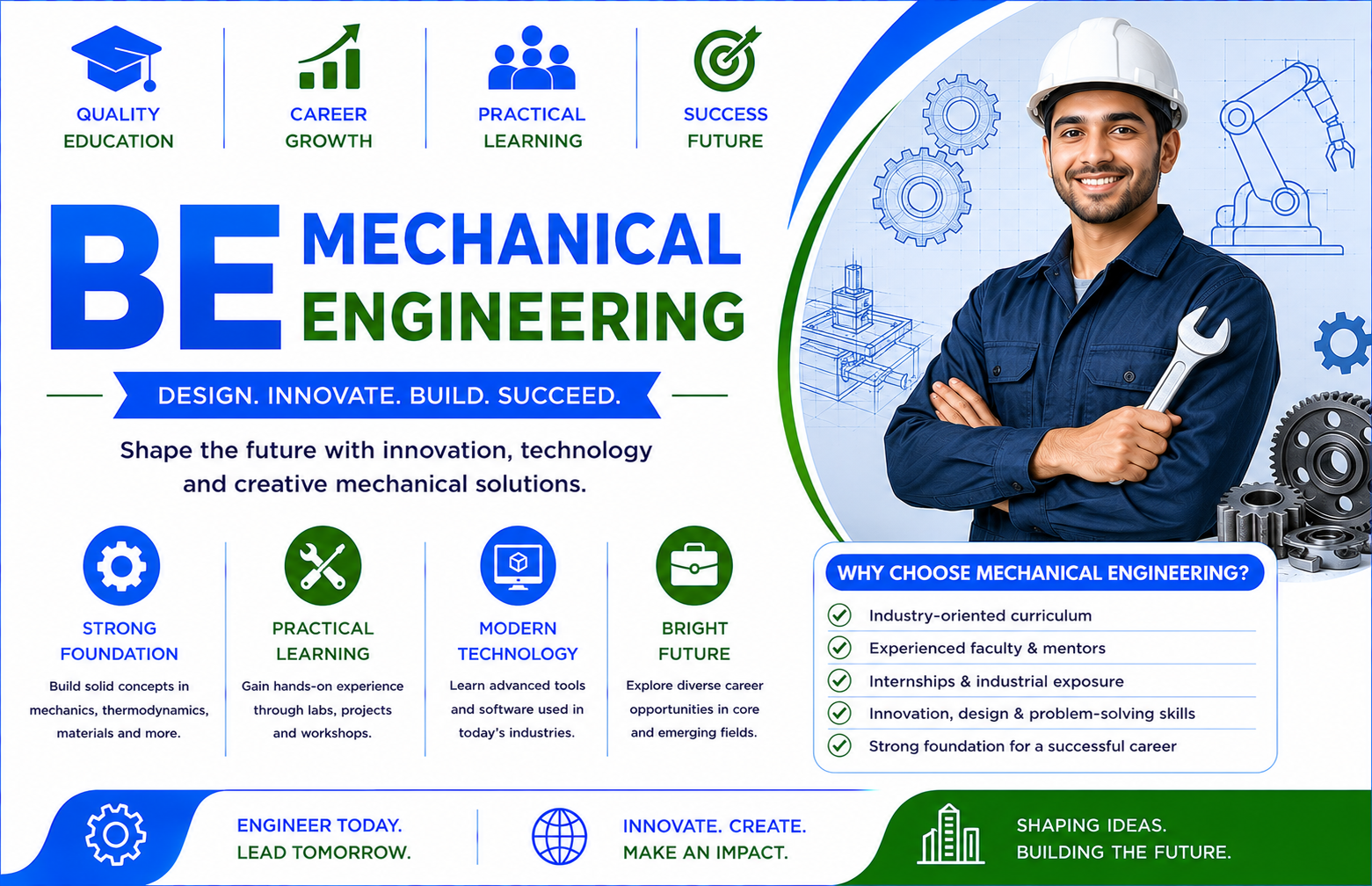
Mechanical Engineering is the branch of engineering that focuses on the design, analysis, manufacturing, and maintenance of machines and mechanical systems. It applies principles of physics, mathematics, and materials science to create products and systems that solve real-world problems.
Mechanical engineers work on a wide variety of technologies, including:
Cars, motorcycles, and aircraft
Engines and turbines
Robots and automated manufacturing systems
Heating, ventilation, and air conditioning (HVAC) systems
Renewable energy equipment such as wind turbines
To become a mechanical engineer, students typically study subjects such as:
Mathematics
Physics
Engineering mechanics
Thermodynamics
Fluid mechanics
Machine design
Manufacturing processes
Computer-aided design (CAD)
Mechanical engineers can work in industries such as automotive, aerospace, energy, manufacturing, construction, robotics, and biomedical engineering.
In simple terms, mechanical engineering is about designing, building, and improving machines and mechanical systems that make everyday life easier and more efficient.
If you mean eligibility to study Mechanical Engineering, the requirements usually are:
Completed 10th grade (Class 10) from a recognized board
Usually requires passing marks in Mathematics and Science (requirements vary by state/institution)
Completed 12th grade (Class 12) with:
Physics
Chemistry
Mathematics (PCM)
Must meet the minimum marks required by the college/university
Admission may be through entrance exams such as state or national engineering entrance tests (depending on the country and institution)
Completed B.E./B.Tech in Mechanical Engineering or a related field
May require an entrance exam or university selection process

Electrical engineering is the branch of Electrical Engineering that focuses on the study, design, development, and maintenance of systems and devices that use electricity, electronics, and electromagnetism.
Electrical engineers work in many areas, including:
Power systems: Generating, transmitting, and distributing electricity to homes and industries.
Electronics: Designing electronic devices such as smartphones, computers, and medical equipment.
Telecommunications: Developing communication systems like mobile networks, satellite communication, and the internet.
Control systems: Creating automated systems used in factories, robots, and vehicles.
Renewable energy: Designing solar, wind, and other clean energy systems.
Electrical engineers typically use:
Mathematics and physics
Circuit analysis and design
Programming and simulation software
Problem-solving and analytical thinking
Electrical engineers can work in industries such as:
Electric power utilities
Consumer electronics
Aerospace
Automotive
Telecommunications
Robotics and automation
Renewable energy
Passed Class 10 (or equivalent), usually with Mathematics and Science.
Duration: about 3 years.
Passed Class 12 (or equivalent) with:
Physics
Mathematics
Usually Chemistry/Computer Science/another approved subject
Admission is often through entrance exams such as JEE Main or state-level engineering entrance exams.
Duration: 4 years.
A B.Tech/B.E. degree in Electrical Engineering or a related field is generally required.
Admission may involve GATE.
If you mean your eligibility, tell me your qualification (10th/12th/diploma/degree), subjects, and country/state, and I can check it.

Computer engineering is the branch of engineering that combines computer science and electrical engineering to design, build, and improve computer systems and computing devices.
Computer engineers work on both hardware (physical components) and software (programs that run on hardware). Their job is to make computers and electronic systems faster, more efficient, and more reliable.
Some of the main areas of computer engineering include:
Computer hardware design – Designing processors, memory, and circuit boards.
Embedded systems – Creating computers built into devices like cars, medical equipment, smart appliances, and robots.
Computer architecture – Improving how processors and computer systems are organized.
Networking – Designing communication systems that connect computers.
Firmware and low-level programming – Writing software that directly controls hardware.
Computer engineers use programming languages such as C, C++, Python, and Assembly, along with electronics knowledge to develop technology.
Common career paths include:
Hardware engineer
Embedded systems engineer
Firmware engineer
Robotics engineer
Network engineer
Systems engineer
Semiconductor or chip design engineer
For example:
A computer scientist might develop a new mobile app.
An electrical engineer might design a power distribution system.
A computer engineer might design the processor and electronics that allow a smartphone to run apps efficiently.
If you mean eligibility for studying Computer Engineering, the requirements usually depend on the country and the level of study.
Completion of 12th grade / higher secondary education
Study of Physics and Mathematics as core subjects
Often Chemistry, Computer Science, or another technical subject as a third subject (varies by institution)
Minimum marks requirement (commonly around 45–60%, depending on the college and category)
Admission may require an entrance exam (for example, in India: JEE Main or state-level engineering entrance tests)
For a Diploma in Computer Engineering:
Usually requires completion of 10th grade
Mathematics and science background is generally preferred
For a Master’s degree (M.E./M.Tech in Computer Engineering):
A relevant bachelor’s degree (such as Computer Engineering, Computer Science, Information Technology, or related fields)
Entrance requirements may apply depending on the institution
If you mean eligibility for Computer Engineering in India, tell me your current qualification (10th, 12th, diploma, or degree) and your state, and I can give the specific requirements.

Aeronautical engineering is a branch of Aerospace Engineering that focuses on the design, development, testing, and maintenance of aircraft that operate within Earth's atmosphere.
Aeronautical engineers work on:
Aircraft design – Designing airplanes, helicopters, drones, and gliders.
Aerodynamics – Studying how air flows around aircraft to improve lift, speed, and fuel efficiency.
Propulsion systems – Developing and improving jet engines and propellers.
Aircraft structures – Ensuring aircraft are strong, lightweight, and safe.
Flight control systems – Designing systems that help pilots control aircraft.
Testing and maintenance – Evaluating aircraft performance and ensuring they meet safety standards.
An aeronautical engineer needs a strong understanding of:
Mathematics
Physics
Mechanics
Computer-aided design (CAD)
Materials science
Programming and simulation
Graduates can work in:
Aircraft manufacturing companies
Airlines
Defense organizations
Space and aviation research organizations
Drone and unmanned aerial vehicle (UAV) companies
Government aviation agencies
Aeronautical engineering deals with aircraft that fly within Earth's atmosphere.
Astronautical engineering deals with spacecraft, satellites, and rockets that operate outside Earth's atmosphere.
In simple terms, an aeronautical engineer helps design and improve the airplanes and helicopters that transport people and goods safely and efficiently.
If you mean eligibility to study Aeronautical Engineering, the requirements usually are:
Education: Completed 10+2 (Class 12) with:
Physics
Chemistry
Mathematics (PCM)
Minimum marks: Often around 50–60% in PCM (varies by college and category).
Entrance exams (India):
JEE Main (for many engineering colleges)
State-level engineering entrance exams
University-specific entrance exams
Usually requires Class 10 pass (some institutes require Class 10 with Mathematics and Science).
A relevant bachelor’s degree (Aeronautical, Aerospace, Mechanical, or related engineering).
Admission may involve GATE or university exams.
Mathematics
Physics
Mechanics
Computer skills
If you tell me your current qualification (10th, 12th, diploma, or degree) and your stream, I can tell you whether you are eligible and what options you have.

Chemical Engineering is the branch of engineering that applies chemistry, physics, mathematics, biology, and economics to design and operate processes that transform raw materials into useful products.
In simple terms, chemical engineers figure out how to make things on a large scale—safely, efficiently, and economically.
They design and manage processes for making products such as:
Medicines and vaccines
Fuels and energy products
Plastics and polymers
Fertilizers
Food and beverages
Cosmetics
Paints and chemicals
Batteries and renewable energy materials
Water treatment systems
Chemical reactions – how substances change into new substances
Thermodynamics – energy and heat changes in processes
Fluid mechanics – movement of liquids and gases
Heat and mass transfer – how heat and materials move
Process design – designing industrial plants and equipment
Process control – using sensors and computers to control operations
Safety and environmental engineering – preventing accidents and reducing pollution
Chemical engineers can work in:
Oil and gas industries
Pharmaceutical companies
Food industries
Environmental companies
Biotechnology firms
Energy and battery industries
Research and development laboratories
If you mean eligibility for Chemical Engineering, the requirements usually depend on the country and level of study.
Generally, you need:
12th standard (Class 12) with Science stream
Subjects:
Physics
Chemistry
Mathematics (usually required)
Minimum marks: commonly around 45–60% in PCM (varies by college and category)
Admission may be through entrance exams such as:
JEE Main
State-level engineering entrance exams
College-specific admission processes
Usually:
A bachelor’s degree in Chemical Engineering or a related field
Often requires an entrance exam such as GATE
If you mean eligibility after 10th, 12th, diploma, or for a specific college/country, tell me your qualification and location, and I can give the exact requirements.

Automotive engineering is a branch of engineering that focuses on the design, development, manufacturing, testing, and maintenance of automobiles, such as cars, trucks, buses, and motorcycles. It combines principles from Mechanical Engineering, Electrical Engineering, Electronics Engineering, and software engineering to create safe, efficient, and reliable vehicles.
Automotive engineers work on areas such as:
An automotive engineer should have knowledge of:
Automotive engineers can work as:
They are employed by automobile manufacturers, auto parts suppliers, motorsport companies, research organizations, and government transportation agencies.
In simple terms, automotive engineering is the science and technology of designing and improving vehicles to make them safer, more efficient, more comfortable, and more environmentally friendly.
Completion of 10th grade (SSLC/SSC) or equivalent
Usually requires passing marks in Mathematics and Science
Completion of 12th grade (10+2) with:
Physics
Chemistry
Mathematics (PCM)
Admission may require an entrance exam (varies by country/institution)
A bachelor’s degree in:
Automotive Engineering
Mechanical Engineering
Related engineering fields
Interest in vehicles and machines
Strong foundation in mathematics and physics
Basic computer skills and problem-solving ability

If you mean eligibility to study Robotics Engineering, the requirements depend on the level and country, but generally:
You usually need to choose the Science stream in 11th and 12th, especially:
Physics
Chemistry
Mathematics (PCM)
Completed 12th grade with Physics, Chemistry, and Mathematics (PCM)
Meet the minimum marks required by the college (often around 50–60%, but it varies)
Qualify an entrance exam where required (for example, engineering entrance exams in your region)
Related degrees that can lead to robotics careers:
B.Tech in Robotics Engineering
B.Tech in Mechanical Engineering
B.Tech in Electronics and Communication Engineering
B.Tech in Electrical Engineering
B.Tech in Computer Science/Artificial Intelligence
Usually:
A relevant engineering bachelor’s degree
Required entrance exam or university admission criteria
Even before joining a course, it helps to learn:
Basic programming (Python/C++)
Mathematics
Electronics basics
Problem-solving skills
If you tell me your current class/qualification (10th, 12th, diploma, or degree) and your country/state, I can give the exact eligibility path.

Biotechnology Engineering is a branch of engineering that combines biology, chemistry, genetics, and engineering principles to develop products and technologies using living organisms or biological systems.
Biotechnology engineers design processes and equipment to produce useful products such as medicines, vaccines, biofuels, improved crops, and environmentally friendly technologies.
Biotechnology engineers can work in:
In simple terms, biotechnology engineering is the application of engineering to biology to create useful products and solve problems in healthcare, agriculture, industry, and the environment. It is a rapidly growing field with many opportunities in research, manufacturing, and innovation.
If you mean eligibility for Biotechnology Engineering, the requirements usually depend on the country and university. In India, the common eligibility criteria are:
Educational qualification: Pass 12th standard (Class 12) with Physics, Chemistry, and Biology/Mathematics as core subjects.
Minimum marks: Usually around 50–60% aggregate in the qualifying subjects (varies by college and category).
Entrance exams: Admission may be through:
JEE Main (for many engineering colleges)
State-level engineering entrance exams
University-specific entrance tests
Some colleges offer merit-based admission
PCB students (Physics, Chemistry, Biology) → eligible in many biotechnology programs.
PCM students (Physics, Chemistry, Mathematics) → also eligible in many engineering colleges.
PCMB students → have the widest options.
You can pursue:
M.Tech Biotechnology
M.Sc Biotechnology
Bioinformatics
Genetic engineering
Pharmaceutical research
Research careers (often requiring higher studies)
If you are asking about eligibility after 10th, 12th, diploma, or for a specific college, tell me your qualification and state/country, and I can give the exact criteria.

Architectural engineering is the branch of engineering that focuses on the design, construction, and operation of buildings. It combines engineering principles with architectural design to create buildings that are safe, functional, energy-efficient, and comfortable.
Unlike architects, who primarily focus on a building's appearance, layout, and user experience, architectural engineers concentrate on the building's technical systems and performance.
Architectural engineers typically work on:
| Architecture | Architectural Engineering |
|---|---|
| Focuses on aesthetics, space planning, and functionality | Focuses on the technical systems that make buildings work |
| Designs the building's form and layout | Designs the building's structure and engineering systems |
| Primarily studies design and art | Primarily studies mathematics, physics, and engineering |
They often:
Architectural engineers work for:
They may specialize in structural engineering, HVAC design, electrical engineering, lighting, acoustics, or sustainable building design.
If you mean eligibility to study Architectural Engineering, the requirements depend on the country and university. In general:
Educational qualification: Completion of 12th grade (higher secondary) or equivalent.
Subjects: Usually Physics, Chemistry, and Mathematics (PCM) are required, especially in India.
Minimum marks: Often around 50% in PCM (varies by institution).
Entrance exams (India):
National Aptitude Test in Architecture (NATA)
JEE Main Paper 2 (B.Arch/B.Planning)
A bachelor's degree in fields such as:
Architecture
Civil Engineering
Architectural Engineering
Mechanical/Electrical Engineering (for building systems specializations)
Some universities may require work experience or entrance tests.
Mathematics and physics knowledge
Interest in buildings, design, and technology
Problem-solving skills
Computer-aided design (CAD) skills
If you mean eligibility in India specifically (for B.Arch or Architectural Engineering), tell me your 12th standard stream (PCM/other), marks, and state, and I can give the exact requirements.

Marine engineering is the branch of engineering that focuses on the design, construction, operation, and maintenance of ships, boats, submarines, offshore platforms, and other marine vessels. It primarily deals with the machinery and technical systems that allow vessels to operate safely and efficiently.
A marine engineer works on systems such as:
Main propulsion engines (diesel, gas turbine, or electric)
Boilers and steam systems
Pumps, compressors, and piping systems
Electrical power generation and distribution
Air conditioning, refrigeration, and ventilation
Fuel, lubrication, and water treatment systems
Marine engineers may work:
At sea as ship engineers responsible for operating and maintaining a vessel's machinery.
Onshore in shipbuilding companies, ports, offshore oil and gas industries, naval organizations, marine equipment manufacturing, or engineering consulting firms.
To become a marine engineer, students usually earn a bachelor's degree in marine engineering or naval architecture and marine engineering. They study subjects such as:
Mathematics and physics
Thermodynamics
Fluid mechanics
Mechanical engineering
Electrical engineering
Ship design
Marine propulsion systems
Marine engineering is an excellent career for people who enjoy mechanical systems, problem-solving, and working with advanced technology. It also offers opportunities to travel, especially for engineers who work onboard ships.
Eligibility for Marine Engineering depends on the country and the institution, but for a typical Bachelor of Technology (B.Tech) / Bachelor of Engineering (B.E.) in Marine Engineering in India, the requirements are usually:
10+2 (Class 12) with Physics, Chemistry, and Mathematics (PCM) as main subjects.
Minimum marks are commonly around 60% in PCM (varies by college).
English is usually required as a subject in Class 10 or 12.
Generally, candidates must be within a specified age limit (often around 17–25 years for entry-level marine engineering courses), though rules vary by institute and category.
Candidates must pass a medical examination, including:
Good eyesight (especially important for seafarers)
Normal color vision
Good physical fitness
No conditions that prevent safe work at sea
Admission may be through:
Indian Maritime University Common Entrance Test (IMU-CET)
Other institute-specific entrance processes
Merit-based admission in some colleges
To work onboard ships as a marine engineer, graduates usually need certification from the maritime authority, such as the Directorate General of Shipping (DGS) in India, along with required training and sea service.
If you tell me your Class (10th/12th), stream (PCM or other), and country/state, I can give the exact eligibility and admission path.
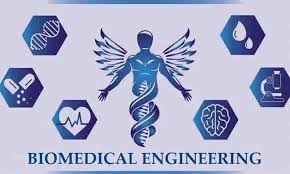
Biomedical Engineering is a branch of engineering that applies engineering principles and technology to medicine and biology to improve healthcare. It combines subjects such as biology, physics, chemistry, mathematics, computer science, and engineering.
Biomedical engineers work on:
Designing medical devices such as pacemakers, artificial limbs, and hearing aids.
Developing imaging equipment like MRI and CT scanners.
Creating artificial organs and tissue engineering solutions.
Improving medical software and healthcare technologies.
Maintaining and testing hospital medical equipment.
Some common career opportunities include:
Medical device engineer
Clinical engineer
Biomedical equipment technician
Research scientist
Rehabilitation engineer
Healthcare technology consultant
Biomedical engineering is ideal for students who enjoy both science and engineering and want to develop technologies that improve people's health and quality of life.
If you mean eligibility for Biomedical Engineering, it depends on the course level and country. For India, the usual requirements are:
12th standard (Class 12) pass with:
Physics and Chemistry as compulsory subjects
Mathematics (required in many engineering colleges)
Biology may also be accepted by some colleges (especially for students from PCB backgrounds)
Minimum marks usually around 45–60% (varies by college and category)
Admission is often through engineering entrance exams such as JEE Main or state-level entrance exams.
10th standard pass (eligibility varies)
Some institutes require science and mathematics background.
A bachelor’s degree in Biomedical Engineering or related fields such as Electrical, Electronics, Mechanical, Biotechnology, or Medical-related engineering disciplines.
If you tell me your current qualification (10th, 12th, diploma, or degree) and your subjects (PCM/PCB), I can tell you the exact eligibility path.

Construction Engineering is a branch of engineering that focuses on the planning, design, management, and execution of construction projects. It combines principles of civil engineering, project management, construction technology, and business practices to ensure that structures are built safely, efficiently, and according to specifications.
Construction engineers work on projects such as:
Buildings and skyscrapers
Roads and highways
Bridges
Dams and tunnels
Airports
Water supply and infrastructure systems
Construction Planning – Preparing schedules, budgets, resources, and construction methods.
Project Management – Coordinating workers, materials, equipment, and contractors.
Structural and Civil Work – Applying engineering knowledge to build strong and safe structures.
Construction Materials – Selecting and testing materials like concrete, steel, and composites.
Safety Management – Ensuring construction sites follow safety rules and regulations.
Quality Control – Checking that construction work meets design standards.
Environmental Management – Reducing environmental impact during construction.
Mathematics and physics
Knowledge of construction methods
Computer-aided design (CAD) and project management software
Communication and leadership skills
Problem-solving abilities
A construction engineer can work as a:
Construction project manager
Site engineer
Planning engineer
Cost estimator
Quality control engineer
Safety engineer
Consultant
If you mean eligibility for studying Construction Engineering, it depends on the level and country. For a typical engineering degree (such as in India):
Common eligibility:
Passed 12th standard (Higher Secondary) with Physics, Chemistry, and Mathematics (PCM).
Minimum marks requirement varies by college (often around 45–60% in PCM).
Admission may be through entrance exams such as JEE Main or state-level engineering entrance tests.
Common eligibility:
Passed 10th standard (SSLC/Matriculation).
Some institutes may require minimum marks or an entrance test.
Common eligibility:
A bachelor’s degree in Civil Engineering, Construction Engineering, or a related field.
Some institutes require GATE qualification.
If you tell me your qualification (10th, 12th, diploma, or degree) and your country/state, I can give the exact eligibility requirements.

Environmental Engineering is a branch of engineering that focuses on protecting human health and the environment. It applies principles of engineering, chemistry, biology, and earth science to solve environmental problems such as pollution, waste management, and water treatment.
Environmental engineers work on projects such as:
Water treatment: Designing systems to provide clean drinking water and treat wastewater.
Air pollution control: Developing technologies to reduce emissions from factories and vehicles.
Solid waste management: Creating safe methods for recycling, composting, and disposing of waste.
Soil and groundwater cleanup: Removing contaminants from polluted land and water.
Environmental impact assessment: Evaluating how construction and industrial projects affect the environment.
Renewable energy and sustainability: Promoting energy-efficient systems and reducing environmental impacts.
If you mean eligibility to study Environmental Engineering, the requirements usually depend on the level of study and the country/institution.
Completion of 12th grade (Higher Secondary) with Physics, Chemistry, and Mathematics (PCM).
Minimum marks requirement (often around 45–60%, depending on the college and category).
Admission may require an engineering entrance exam (for example, in India, exams such as JEE Main or state-level entrance tests may be used).
Common eligibility:
A bachelor’s degree in Environmental Engineering, Civil Engineering, or a related engineering/science field.
Admission may require an entrance exam such as GATE in India (depending on the institution).

M.Tech stands for Master of Technology. It is a postgraduate degree in engineering and technology, usually completed after a bachelor's degree such as a B.Tech or B.E..
Duration: Typically 2 years (4 semesters)
Admission: Often based on entrance exams (such as GATE in India) or university-specific entrance tests.
Specializations: Common options include:
Computer Science Engineering
Artificial Intelligence and Machine Learning
Civil Engineering
Mechanical Engineering
Electrical Engineering
Electronics and Communication Engineering
Data Science
Cybersecurity
Educational qualification: A B.Tech/B.E. degree in a relevant engineering or technology field from a recognized university.
Minimum marks: Usually around 50–60% aggregate marks (varies by institute and category).
Entrance exam: Many top institutes in India require a valid GATE (Graduate Aptitude Test in Engineering) score. Some universities conduct their own entrance exams or offer admission based on merit.
Final-year students: Students in the final year of B.Tech/B.E. are often eligible to apply.






Your Future is Created by what you do Today not Tomorrow
UDYAM REGISTRATION NUMBER : UDYAM-TN-03-0125460
© Bright Life All Rights Reserved


