
Since 2009
Since 2009


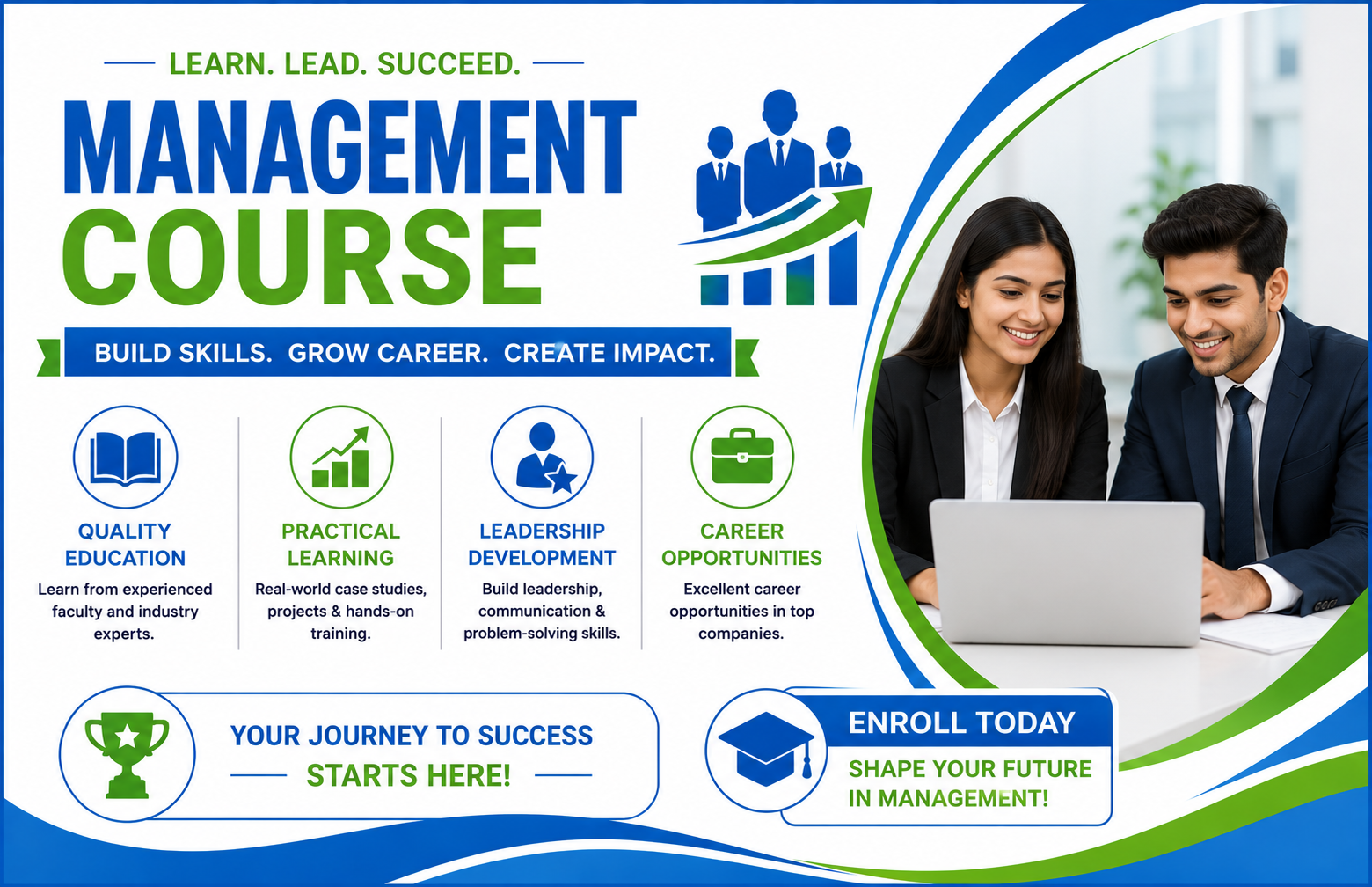
Management is the administration of organizations, whether they are a business, a nonprofit organization, or a government body through business administration, nonprofit management, or the political science sub-field of public administration respectively
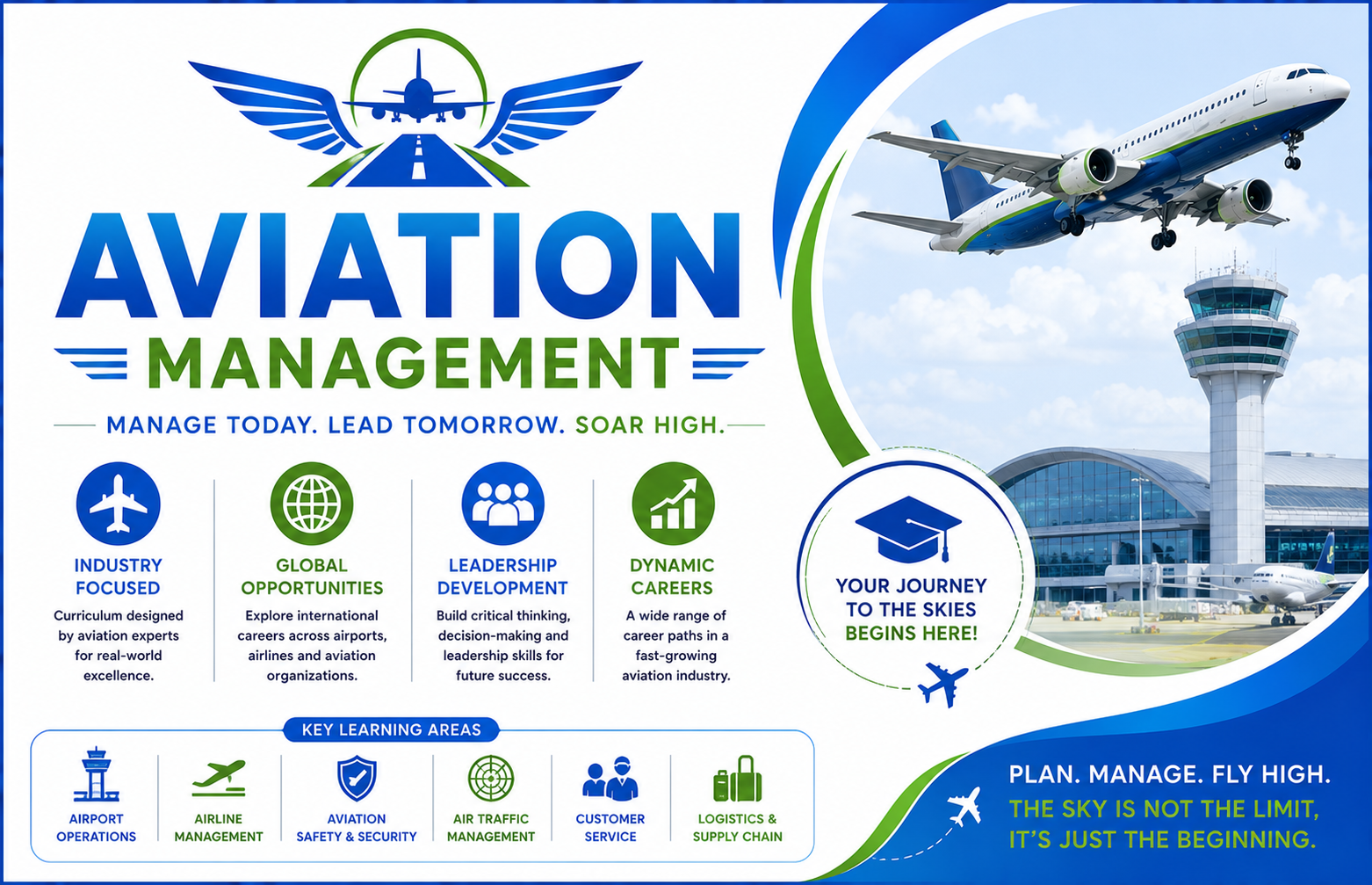
An Aviation Management course is a specialized program that teaches you how the aviation industry (airplanes, airports, airlines, and air travel services) is managed and operated.
This course focuses on both business + aviation operations, such as:
Airline operations (how flights are planned and run)
Airport management (how airports are organized and managed)
Air traffic basics (how aircraft are controlled safely in the sky)
Aviation safety and security
Customer service in airlines
Aviation law and regulations
Cargo and logistics management
Tourism and travel management
It is suitable for students who are interested in:
Becoming airline or airport managers
Working in aviation companies or airports
Jobs in airline customer service, operations, or administration
Careers in travel and tourism industry
You can work as:
Airport manager
Airline operations executive
Ground staff supervisor
Cargo manager
Flight operations coordinator
Aviation safety officer
The eligibility depends on the level of the course, but generally:
Minimum qualification: 10th or 12th pass
Any stream (Science / Commerce / Arts)
Some institutes prefer good English communication skills
Minimum qualification: 12th pass (10+2)
Any stream is usually accepted (some colleges prefer Commerce or Business Studies)
Minimum marks: usually 45%–50% (varies by college)
Age: generally 17–25 years
Minimum qualification: Bachelor’s degree in any field
Some colleges may require entrance tests or interviews
Good communication skills (English)
Basic knowledge of computers
Medically fit (important for some aviation-related roles)
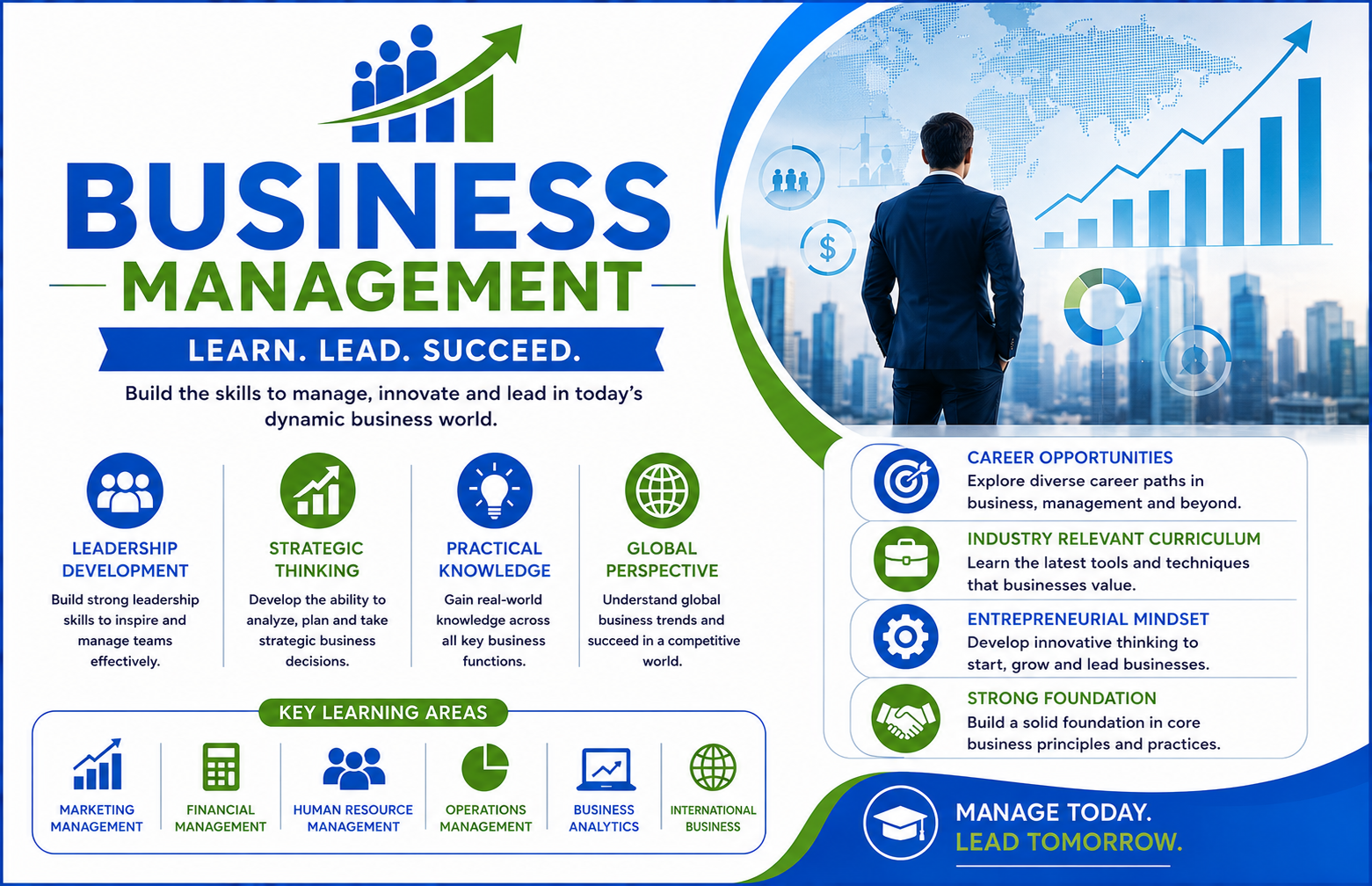
A Business Management course is a program of study that teaches how businesses and organizations are planned, organized, led, and controlled to achieve their goals.
It covers the skills needed to manage people, resources, finances, and operations effectively.
Management Principles – planning, organizing, leading, and controlling
Marketing – promoting products and services
Finance – budgeting, investments, and financial decision-making
Human Resource Management (HRM) – hiring, training, and managing employees
Accounting – recording and analyzing financial transactions
Operations Management – improving business processes and productivity
Business Communication – professional writing, presentations, and teamwork
Entrepreneurship – starting and running a business
Strategic Management – long-term business planning and competitive strategies
Leadership and team management
Decision-making and problem-solving
Communication and negotiation
Project management
Financial and analytical thinking
Business planning
After studying Business Management, you can pursue roles such as:
Business Manager
Project Manager
Marketing Executive
Human Resources Manager
Operations Manager
Sales Manager
Entrepreneur
Business Analyst
Minimum qualification: 10th or 12th pass (varies by institute)
Age: Usually 16+ or 17+
Requirement: Basic English and math skills (sometimes)
Minimum qualification: 12th pass from any stream (Arts / Commerce / Science)
Minimum marks: Usually 45%–60% (depends on college)
Entrance exams (optional in some colleges):
CUET (India)
College-specific entrance tests
Minimum qualification: Bachelor’s degree in any field
Minimum marks: Usually 50% or above
Entrance exams (very important in most cases):
CAT
MAT
XAT
CMAT
Some colleges also require:
Group Discussion (GD)
Personal Interview (PI)
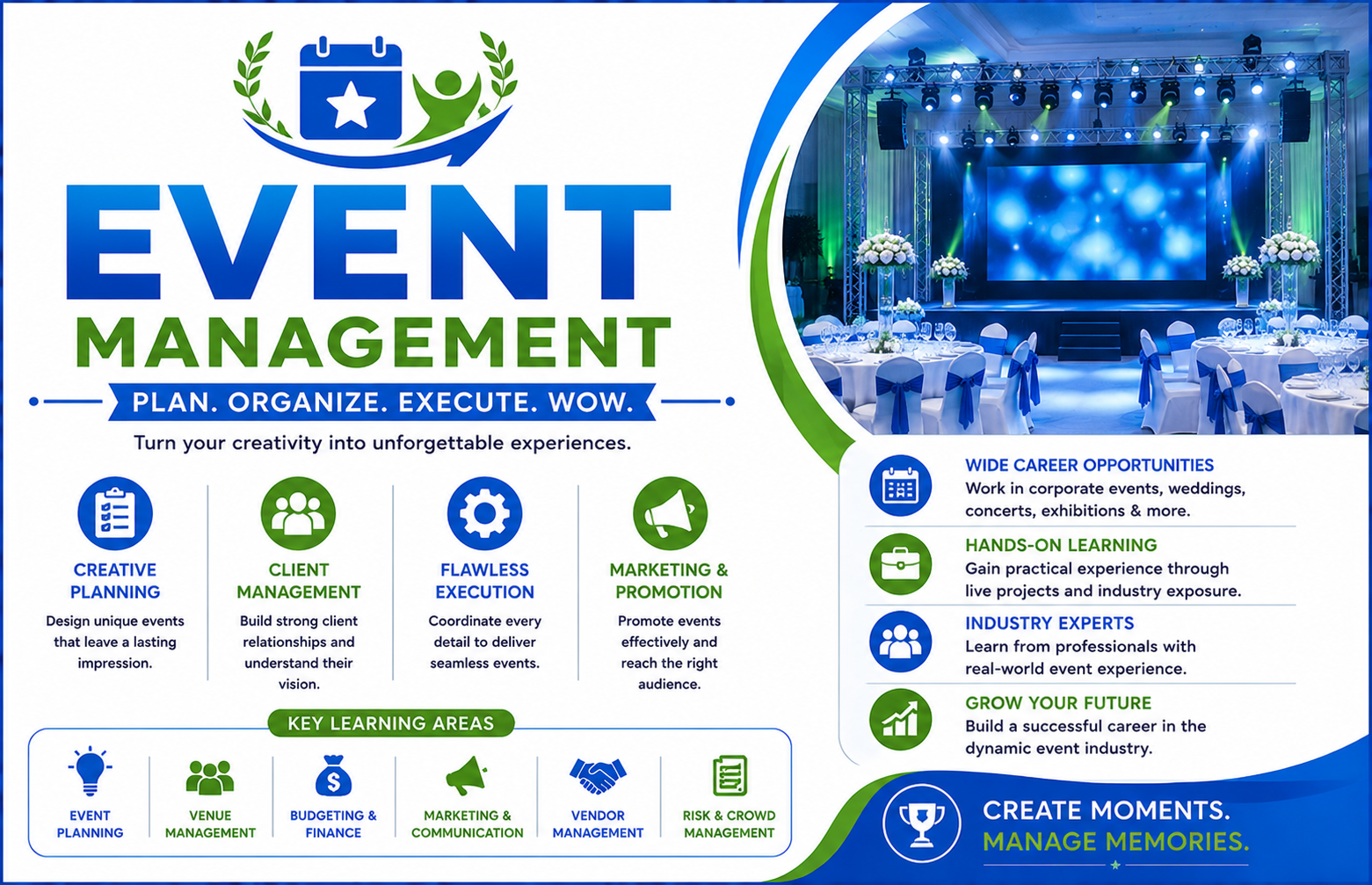
An Event Management Course is a professional program that teaches you how to plan, organize, coordinate, and manage events such as:
Weddings
Corporate meetings and conferences
Concerts and festivals
Sports events
Exhibitions and trade shows
Fashion shows
Social and cultural events
Typical subjects include:
Event planning and budgeting
Venue selection and management
Marketing and promotion
Sponsorship management
Public relations
Hospitality and guest management
Risk and crisis management
Event logistics and operations
Team leadership and communication
Certificate Course: 3–6 months
Diploma Course: 6 months–1 year
Bachelor's Degree: 3–4 years
Master's Degree: 1–2 years
Communication skills
Creativity
Organizational ability
Leadership
Problem-solving
Time management
After completing an event management course, you can work as:
Event Manager
Wedding Planner
Event Coordinator
Corporate Event Planner
Exhibition Manager
Festival Organizer
Public Relations Executive
Eligibility for an Event Management Course depends on the level of the course (certificate, diploma, or degree), but generally it is quite flexible.
Minimum qualification: 10th or 12th pass (varies by institute)
Most colleges prefer 12th pass from any stream (Arts, Commerce, or Science)
12th pass is usually required
Some institutes may accept students after 10th for basic diploma/certificate programs
Must have completed 12th standard (any stream)
Minimum marks may be required (usually 40–50%)
Must have a bachelor’s degree in any field
Some institutes may require entrance tests or interviews
Good communication skills
Interest in organizing events
Creativity and leadership ability
Basic computer knowledge
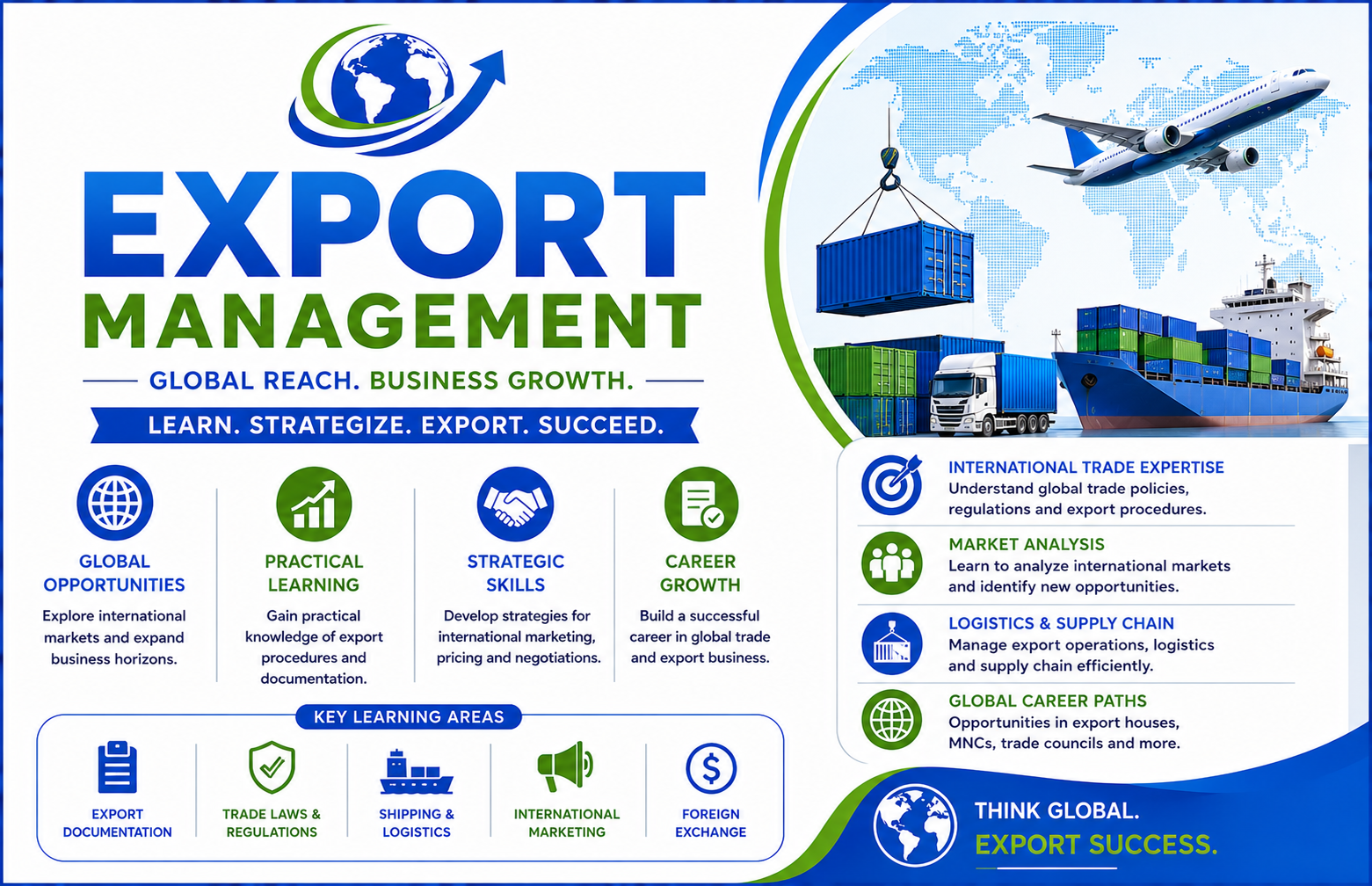
An Export Management course is a business and trade-focused program that teaches how goods and services are sold and shipped from one country to another.
In simple terms, it trains you to handle the entire process of international selling (exporting)—from finding foreign buyers to making sure products legally and safely reach another country.
1. Basics of International Trade
How global trade works
Import vs export rules
Trade policies and agreements
2. Export Documentation
Invoices, packing lists, shipping bills
Customs paperwork
Certificates of origin and compliance
3. Logistics & Shipping
Sea, air, and land transport
Freight forwarding
Warehousing and supply chain basics
4. International Marketing
Finding overseas customers
Market research for different countries
Pricing for global markets
5. Foreign Exchange & Payments
Currency exchange systems
International payment methods (LC, bank transfer, etc.)
6. Export Laws & Regulations
Customs duties
Trade restrictions
Compliance with international rules
Export Manager
International Trade Consultant
Logistics Coordinator
Import-Export Executive
Supply Chain Analyst
Eligibility for an Export Management course depends on the level of the course (certificate, diploma, or degree), but generally the requirements are simple.
1. Educational Qualification
Most courses require 10+2 (12th pass) from any stream (Arts, Commerce, or Science)
For advanced courses (Diploma/PG), you may need:
Bachelor’s degree in any discipline
2. Minimum Marks
Usually no strict cut-off, but some institutes prefer 40–50% or above
3. Age Limit
Generally no fixed age limit
Some short-term programs prefer candidates 18 years or older
4. Language Skills
Basic English communication is helpful (important for international trade)
5. Additional Advantage (not mandatory)
Background in commerce, business, or economics
Interest in international trade or logistics
Finance Management is the study of how money is planned, managed, invested, and controlled in a business or organization.
In simple words, it teaches you how to:
💰 Manage income and expenses
📊 Prepare and understand budgets
🏦 Handle banking and investments
📈 Analyze financial performance
💳 Manage business funds and cash flow
🧾 Understand accounting and financial reports
📉 Identify and manage financial risks
Eligibility after 12th
For most undergraduate finance-related courses such as B.Com Finance, B.Com Banking & Finance, BBA Finance, or BBA Financial Management:
✅ You should have passed 12th / Higher Secondary
✅ Any stream (Commerce, Science, or Arts) is generally accepted, depending on the college
✅ Some colleges may require Commerce/Accountancy or specific subjects
✅ Admission may be based on 12th marks, while some institutions may have an entrance test
✅ Minimum marks requirements vary by college, commonly around 40–50% or above
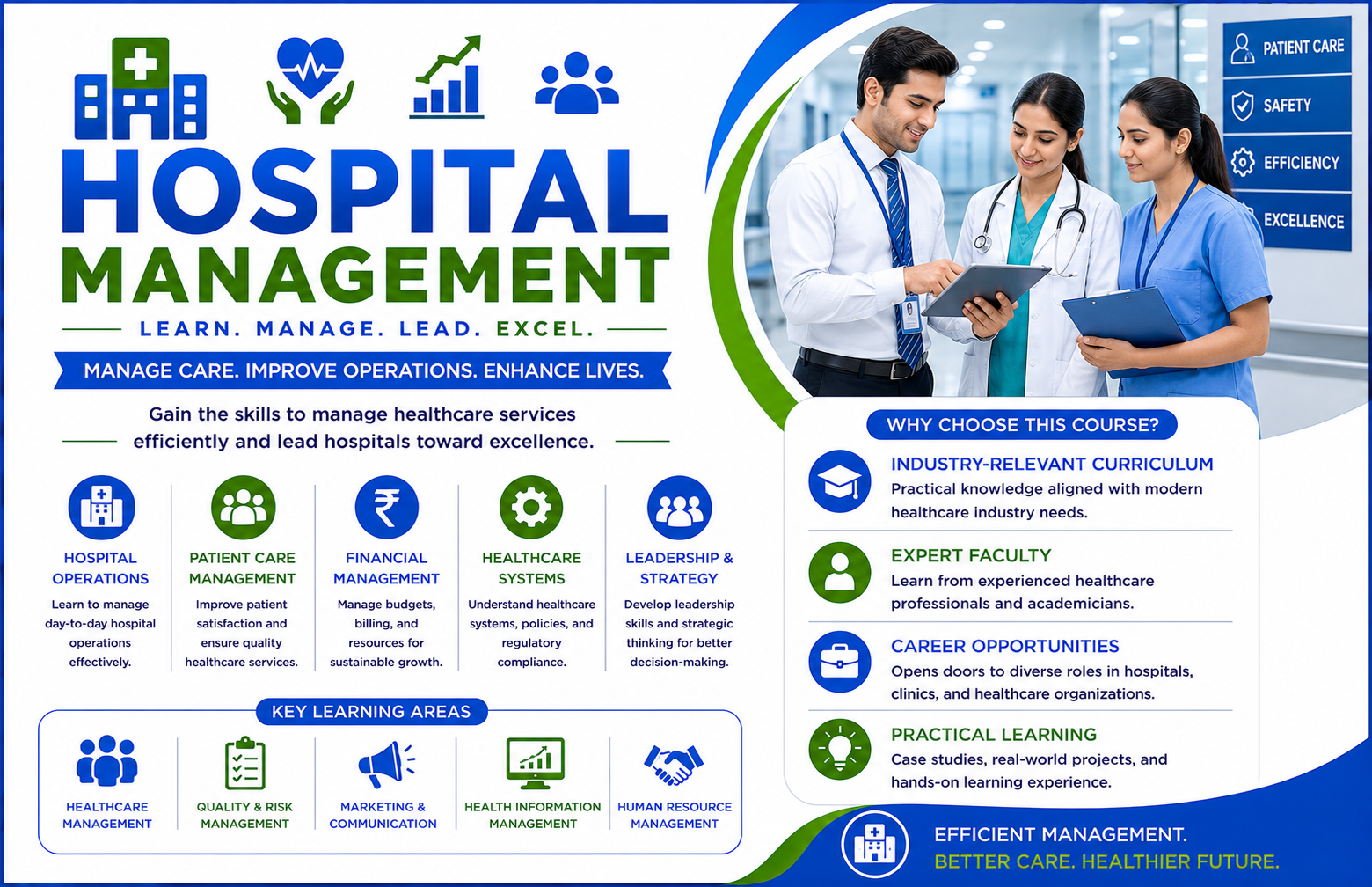
A Hospital Management course (also called Healthcare Management or Hospital Administration) is a program that teaches how to manage and run hospitals and healthcare organizations efficiently.
It focuses on the business and administrative side of healthcare, not medical treatment. You learn how hospitals are organized, funded, and operated.
Common subjects include:
Hospital administration and operations
Healthcare planning and management
Medical records and health information systems
Hospital finance and accounting
Human resource management
Healthcare laws and ethics
Quality control in healthcare services
Students who are interested in healthcare but don’t want to become doctors or nurses
Commerce, science, or management students after 12th or graduation (depends on course level)
Diploma in Hospital Management
Bachelor’s (BBA / BSc in Healthcare Management)
MBA in Hospital & Healthcare Management
Certificate courses (short-term)
After completing it, you can work as:
Hospital administrator
Healthcare manager
Medical office manager
Health insurance manager
Operations manager in hospitals or clinics
Hospitals, clinics, insurance companies, and NGOs all hire people with this qualification.
Usually: 10th or 12th pass
Some institutes prefer 12th pass students
Any stream (Science / Commerce / Arts)
12th pass required
Minimum marks: usually 45%–50% (varies by college)
Any stream is accepted in most colleges
Graduation required (any stream: BBA, BSc, BA, BCom, etc.)
Minimum marks: usually 50%+
Some colleges may require entrance exams (like CAT, MAT, CMAT, or their own test)
Can be done after 10th or 12th or graduation
No strict eligibility in many cases
If you want, tell me your current qualification (10th, 12th, or degree), and I can suggest the best hospital management course for you specifically.
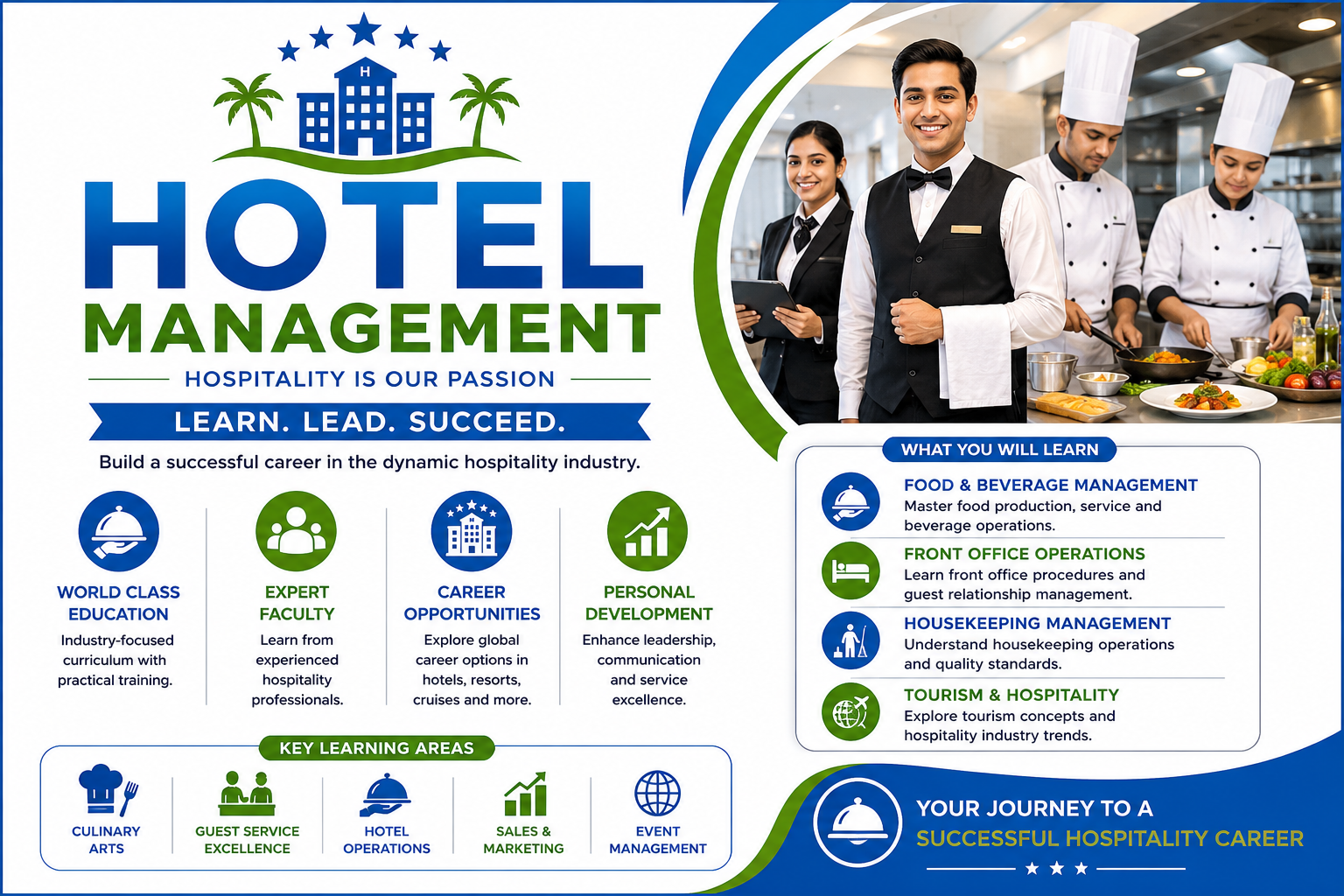
A Hotel Management course is a professional program that teaches students how to manage and operate hotels, restaurants, resorts, and other hospitality businesses.
Typical subjects include:
Front Office Management
Food and Beverage Service
Housekeeping Operations
Hospitality Marketing
Hotel Accounting and Finance
Event Management
Tourism Management
Customer Service and Communication Skills
Food Production (Cooking Basics)
Diploma: 1–2 years
Bachelor's Degree (BHM/BSc Hospitality & Hotel Management): 3–4 years
Certificate Courses: 6 months–1 year
After completing hotel management, you can work as:
Hotel Manager
Front Office Executive
Restaurant Manager
Chef
Event Manager
Housekeeping Manager
Cruise Line Staff
Resort Manager
Hospitality Consultant
Good communication skills
Customer service attitude
Leadership and teamwork
Problem-solving ability
Time management
Eligibility depends on the type of course you want to do:
Minimum qualification: 10th pass (some colleges prefer 12th pass)
Age limit: Usually 17+ years
Requirement: Basic English communication skills
Minimum qualification: 12th pass from any stream (Science, Commerce, Arts)
Minimum marks: Usually 45%–50% (varies by college)
Age limit: Generally 17–25 years (varies)
Entrance exams (some colleges):
NCHM JEE (for top government institutes like IHMs)
Minimum qualification: 10th or 12th pass
Duration: 3 months to 1 year
No entrance exam in most cases
Good communication (English is important in top hotels)
Grooming and personality development
Interest in hospitality and customer service
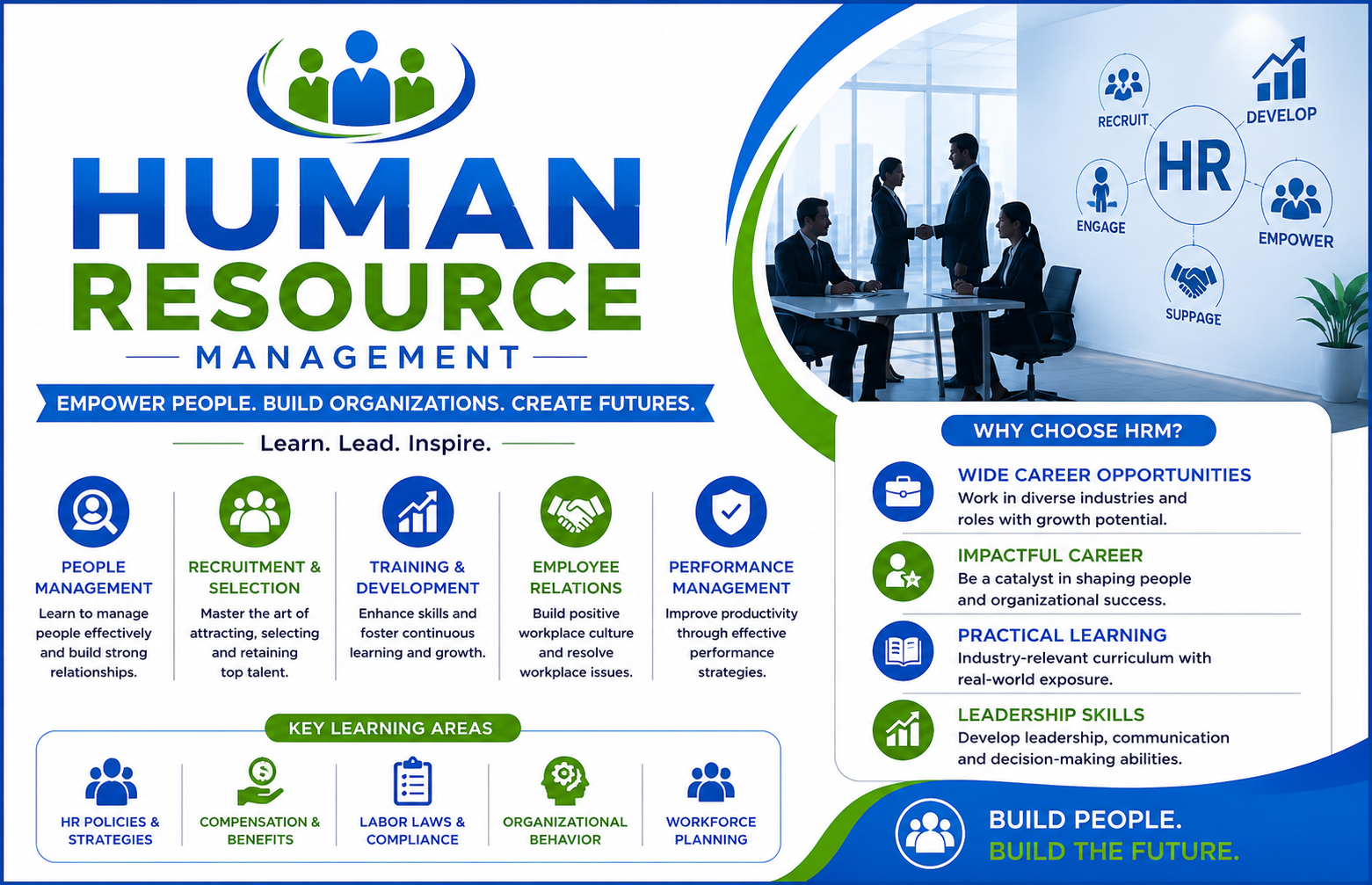
A Human Resource Management (HRM) course is a program that teaches how organizations manage their employees effectively. It focuses on recruiting, developing, motivating, and retaining staff while ensuring compliance with labor laws and organizational policies.
Recruitment and Selection – Hiring the right employees.
Training and Development – Improving employee skills and performance.
Performance Management – Evaluating and enhancing employee productivity.
Compensation and Benefits – Designing salaries, incentives, and benefits.
Employee Relations – Managing workplace relationships and resolving conflicts.
Labor Laws and Ethics – Understanding employment regulations and ethical practices.
Workforce Planning – Forecasting staffing needs.
Talent Management – Attracting and retaining high-performing employees.
Communication and interpersonal skills
Leadership and team management
Conflict resolution
Interviewing and recruitment techniques
Organizational planning
Decision-making and problem-solving
After studying HRM, you may work as:
HR Officer/Executive
Recruiter
Training and Development Coordinator
Compensation and Benefits Specialist
Talent Acquisition Specialist
HR Manager
Employee Relations Manager
Students interested in business and management
Current employees moving into HR roles
Managers who supervise teams
Entrepreneurs who need to manage staff effectively
Certificate courses: A few weeks to several months
Diploma programs: 1–2 years
Bachelor's degree: 3–4 years
Master's degree (MBA/HRM): 1–2 years
Eligibility for a Human Resource Management (HRM) course depends on the level of study you choose:
Usually: 10th or 12th pass
Some institutes may require basic English and computer knowledge
12th pass (any stream: Arts, Commerce, Science)
Some institutes prefer basic communication skills
12th pass from any stream
Minimum marks may be required (varies by college)
Bachelor’s degree in any field (like BA, BCom, BSc, BBA)
Many colleges require entrance exams such as:
CAT / MAT / XAT / CMAT (in India)
Some institutes may also conduct interviews or group discussions
Open to graduates or working professionals
No strict age limit in most cases
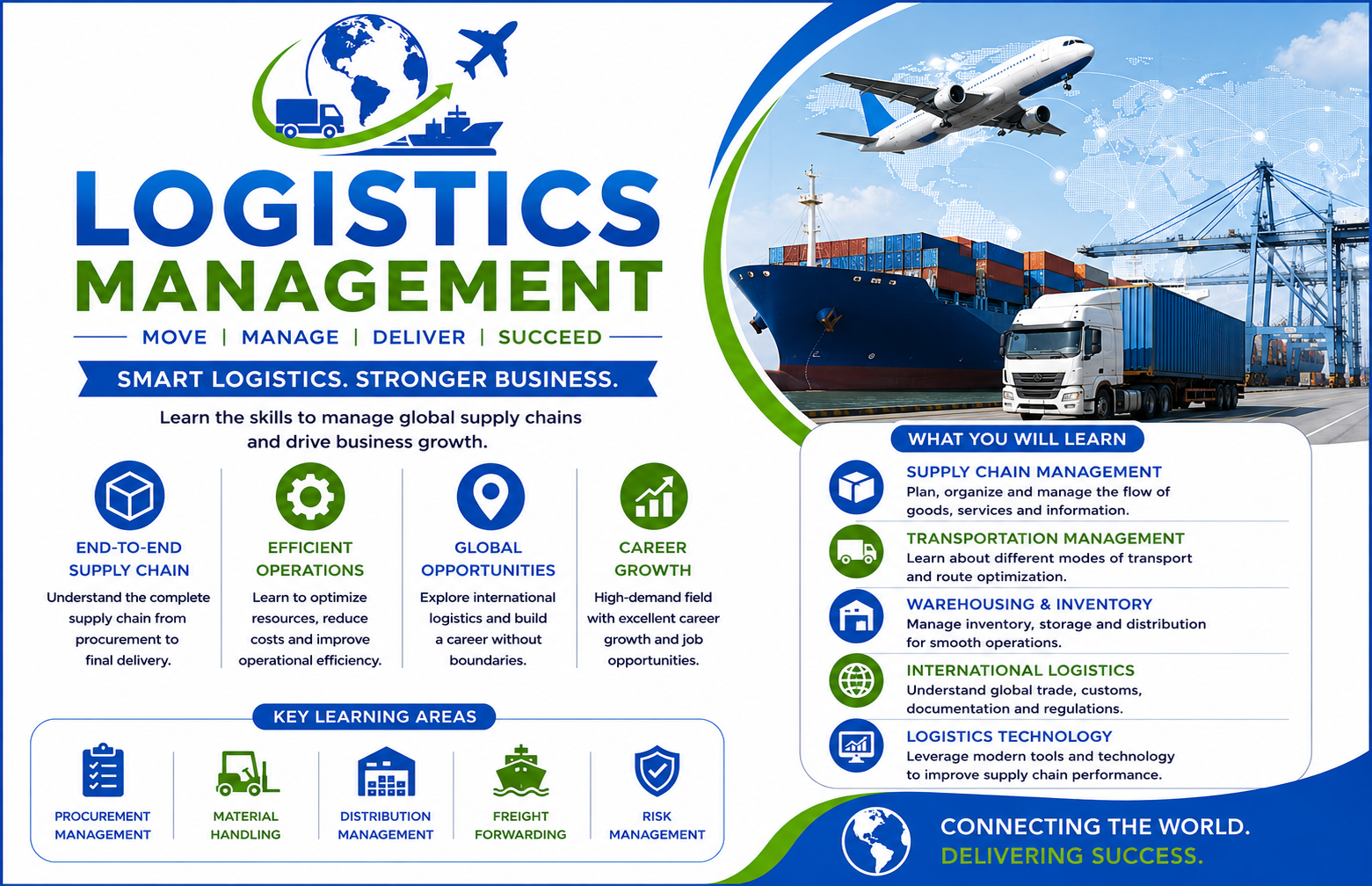
A Logistics Management course is a program of study that teaches how to plan, organize, and control the movement of goods, services, and information from the point of origin to the final customer.
It focuses on making sure the right product reaches the right place, at the right time, in the right condition, and at the lowest possible cost.
A typical course covers topics like:
Supply chain management (how products move from suppliers to customers)
Transportation management (road, rail, air, and sea shipping)
Warehousing and inventory control
Procurement and purchasing
Packaging and distribution
Demand forecasting
International trade and shipping rules
Use of logistics software and tracking systems
Planning and coordination
Problem-solving and decision-making
Cost and time optimization
Communication and teamwork
Analytical thinking
Logistics is used in almost every industry, including:
E-commerce (Amazon-style delivery systems)
Manufacturing companies
Shipping and freight companies
Retail businesses
Airlines and transport companies
After studying logistics management, you can work as:
Logistics manager
Supply chain analyst
Warehouse manager
Procurement officer
Transportation coordinator
Eligibility for a Logistics Management course depends on the level of study (certificate, diploma, degree, or postgraduate).
You can join:
Certificate courses / short-term diploma in logistics or supply chain basics
Eligibility:
Pass in 10th standard from a recognized board
You can apply for:
Diploma in Logistics Management
BBA in Logistics / Supply Chain Management
B.Sc / BA in Logistics or related fields
Eligibility:
Pass in 12th standard (any stream: Arts, Commerce, Science)
Some colleges may prefer Commerce/Maths, but it’s not always required
You can study:
MBA in Logistics & Supply Chain Management
PG Diploma in Logistics
Eligibility:
A Bachelor’s degree in any field
Some institutes require entrance exams or work experience (optional)
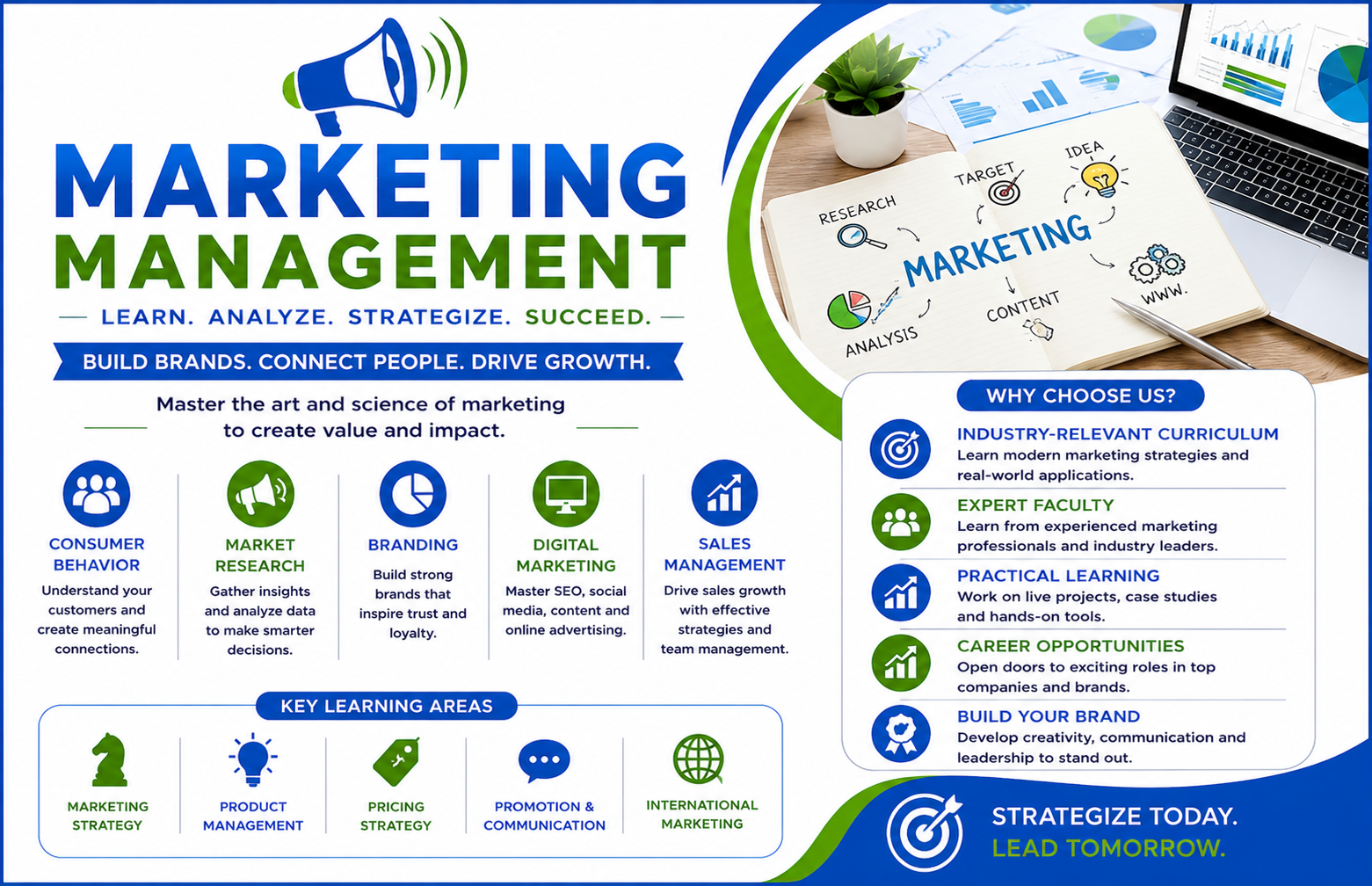
A Marketing Management course is a subject or program that teaches how businesses plan, promote, price, and distribute products or services to satisfy customers and achieve organizational goals.
Marketing concepts and principles
Consumer behavior (understanding customer needs and buying habits)
Market research and data analysis
Segmentation, targeting, and positioning (STP)
Product management
Pricing strategies
Advertising and promotion
Digital marketing and social media marketing
Sales management
Brand management
Marketing strategy and planning
Analyzing markets and competitors
Creating marketing campaigns
Developing branding strategies
Understanding customer behavior
Using digital marketing tools
Making marketing decisions based on data
After studying marketing management, you can work as:
Marketing Executive
Brand Manager
Digital Marketing Specialist
Sales Manager
Market Research Analyst
Advertising Executive
Product Manager
Eligibility for a Marketing Management course depends on the level of study:
Usually: 10th or 12th pass
Some institutes prefer 12th pass (any stream: Arts, Commerce, Science)
Must have completed 12th standard (Higher Secondary)
Any stream is generally accepted, but Commerce students have an advantage
Minimum marks requirement varies (often 50% or above in some colleges)
Must have a Bachelor’s degree in any discipline
Usually requires at least 50% marks (varies by college)
Some institutes require entrance exams like:
CAT
MAT
XAT
CMAT
Operations Management (OM) is a business course that focuses on how organizations plan, produce, and deliver goods and services efficiently.
In simple terms, it teaches how companies make things work smoothly day-to-day—like turning raw materials into finished products or delivering services to customers on time and at low cost.
You typically study how to:
Design and manage production systems (factories, service processes)
Control quality of products/services
Manage inventory and supply chains
Improve efficiency and reduce waste
Plan capacity, scheduling, and workflow
Use data and analytics for decision-making
Operations Management is important in:
Manufacturing companies (cars, electronics, textiles)
Service industries (banks, hospitals, hotels)
Logistics and supply chain companies (delivery, shipping)
Usually: 10th pass or 12th pass
Basic maths and English knowledge is enough
Must have completed 12th standard (Higher Secondary)
Any stream: Commerce, Science, or Arts (varies by college)
Some colleges prefer basic mathematics or business studies
Must have a Bachelor’s degree in any discipline
Common entrance exams (in India):
CAT / MAT / XAT / CMAT / GMAT (depends on college)
Work experience is optional but can be helpful in some institutes
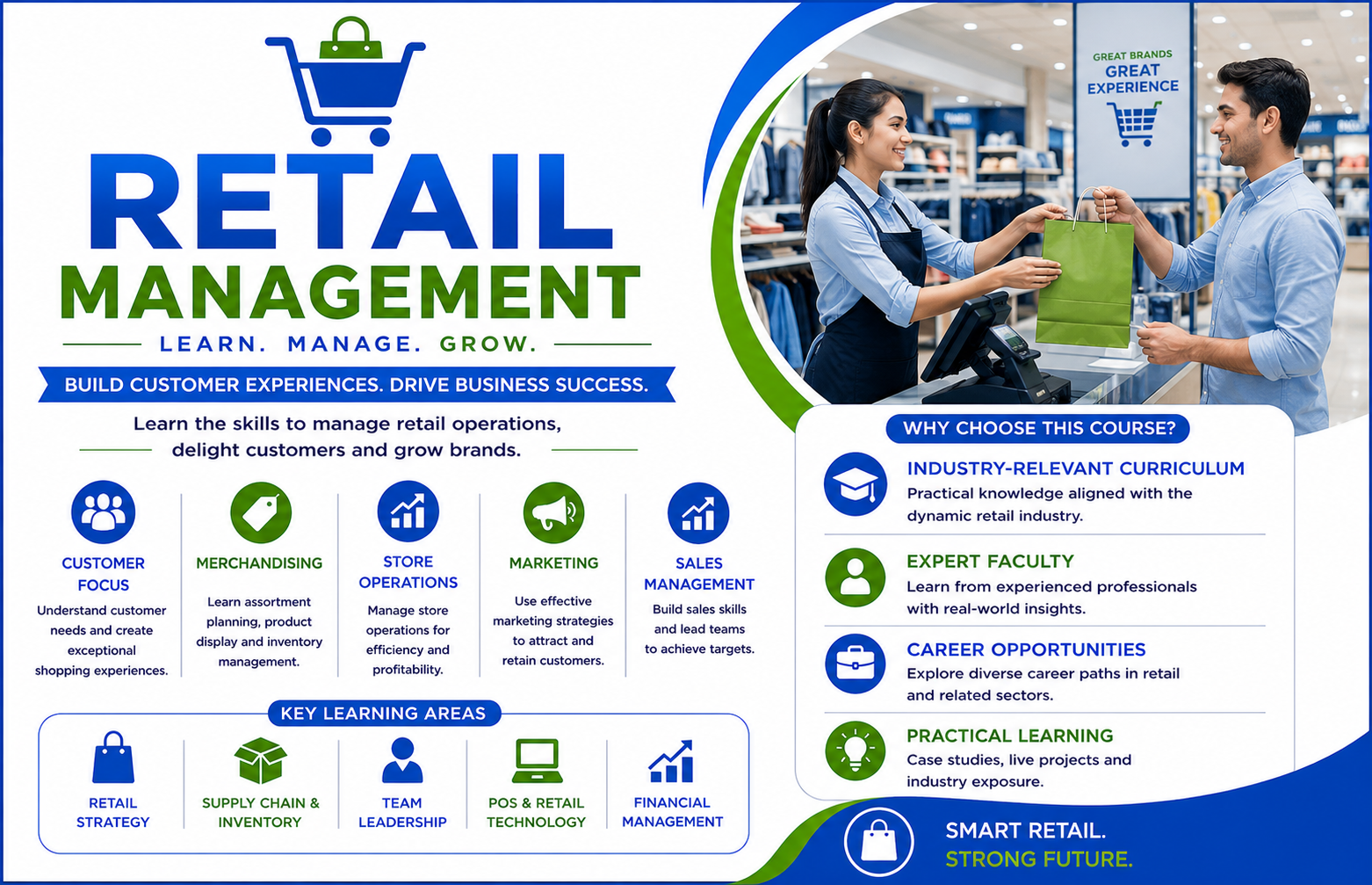
A Retail Management course is a program that teaches students how retail businesses operate and how to manage stores, customers, products, sales, and staff effectively.
Typical subjects include:
Retail store operations
Sales and customer service
Inventory and stock management
Merchandising and product display
Marketing and promotions
Supply chain management
Retail finance and accounting
E-commerce and online retailing
Human resource management in retail
Retail Management is available as:
Certificate courses (a few weeks to months)
Diploma courses (6 months to 2 years)
Bachelor's degree programs (3–4 years)
MBA or postgraduate programs specializing in retail management
After completing the course, you can work as:
Retail Store Manager
Sales Manager
Merchandiser
Inventory Manager
Customer Relationship Manager
Retail Operations Executive
E-commerce Manager
Department Manager in retail chains
Communication skills
Leadership abilities
Customer service orientation
Problem-solving skills
Business and analytical thinking
2. Diploma Courses
3. Bachelor’s Degree (BBA in Retail Management / similar)
4. MBA / Postgraduate in Retail Management

A Sales Management course teaches you how businesses plan, lead, and control the selling process to achieve revenue targets. It is part of the broader field of Sales Management and is useful for careers in marketing, business development, retail, and corporate sales.
Most courses cover how companies build and manage a sales team and strategy, including:
Sales planning and forecasting
Customer relationship management (CRM)
Sales techniques and negotiation skills
Territory and distribution management
Performance tracking and sales analytics
Team leadership and motivation
Retail and B2B (business-to-business) selling
This course is suitable for:
Commerce, business, or MBA students
Working professionals in marketing/sales
Entrepreneurs and small business owners
Freshers looking for business careers
You can study Sales Management in different ways:
BBA (Bachelor of Business Administration)
MBA (Marketing / Sales specialization)
3–12 month professional diplomas in sales or marketing
Short-term business management certificates3. Online courses (flexible learning)
After completing this course, you can work as:
Sales Executive / Sales Officer
Area Sales Manager
Business Development Executive
Marketing Executive
Retail Store Manager
Account Manager
👉 Example: BBA in Sales / Marketing / Retail Management
📌 Some institutes also conduct interviews or group discussions.
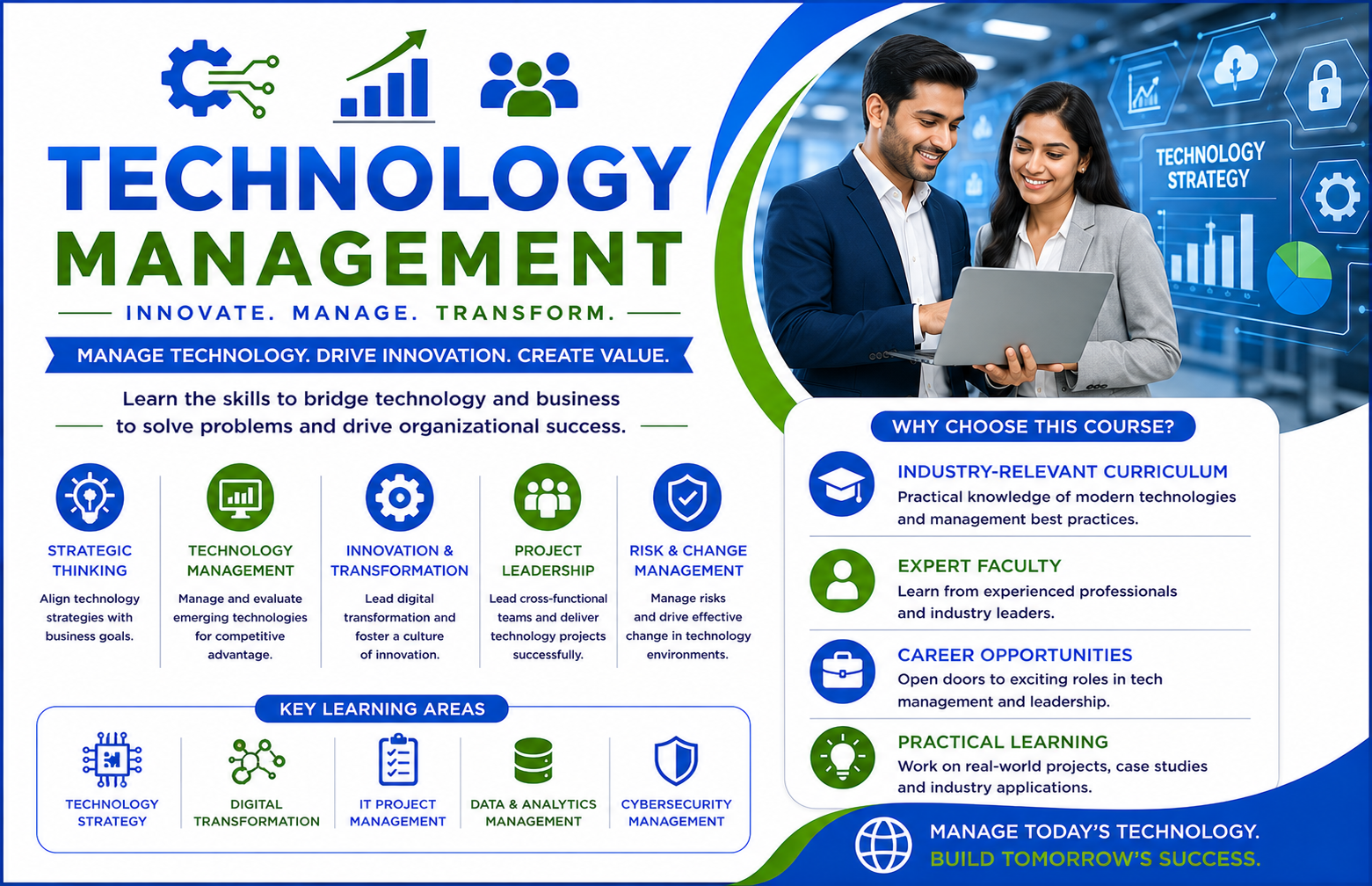
A Technology Management course focuses on how organizations use technology to achieve business goals. It combines concepts from engineering, innovation, business strategy, and project management.
By the end of the course, students can:
Graduates with knowledge of technology management can work as:

A Fire and Safety Management course is a professional training program that teaches students how to prevent fires, handle emergencies, and manage safety in workplaces, industries, and public places.
It focuses on developing skills to protect people, property, and the environment from fire hazards and other accidents.
The course usually covers:
Basics of fire science (how fire starts and spreads)
Fire prevention techniques
Firefighting equipment (extinguishers, hydrants, sprinklers)
Emergency response and evacuation planning
Industrial safety rules and hazard control
Risk assessment and accident prevention
First aid and disaster management
Safety laws and regulations
You can study fire and safety at different levels:
Certificate in Fire and Safety Management (short-term)
Diploma in Fire and Safety Engineering / Management
Advanced Diploma courses
Bachelor’s degree in Fire and Industrial Safety (in some institutions)
Professional certifications like:
National Examination Board in Occupational Safety and Health (NEBOSH)
Occupational Safety and Health Administration (OSHA) training programs
Institution of Occupational Safety and Health (IOSH)
Certificate: 3–6 months
Diploma: 1–2 years
Degree: 3–4 years
After completing this course, you can work as:
Fire Safety Officer
HSE (Health, Safety, Environment) Officer
Safety Supervisor
Fireman / Fire Technician
Risk Assessment Officer
Industrial Safety Inspector
Jobs are available in:
Factories and industries
Construction sites
Oil and gas companies
Airports and railways
Hospitals and hotels
Usually 10th or 12th pass (depending on course level)
Some advanced courses require science background





Your Future is Created by what you do Today not Tomorrow
UDYAM REGISTRATION NUMBER : UDYAM-TN-03-0125460
© Bright Life All Rights Reserved
